


When Movement Becomes Work

Why Play Might Be the Missing Piece in Your Fitness
I've noticed something this month — in the podcasts I've been listening to, the articles landing in my feed, the conversations I keep having. They've all been circling the same idea: the importance of play in movement.
And it's made me look at something we've quietly done as a society without really questioning it. We've turned movement into exercise.
What I mean by that: we don't count a walk as exercise. We don't count running around with the kids, or dancing in the kitchen, or climbing something just because it's there. We file those under "not real movement" and write off their value — even though our bodies are doing exactly what they're designed to do.
We've Made Movement Stiffer Than It Needs to Be
Last month I wrote about chapters closing and balance being dynamic, not still. This month's realisation sits right alongside that — because I think we've done to movement what we sometimes do to identity: made it rigid under the guise of improvement.
Here's what play actually does to the body that structured exercise often doesn't. When you play — when you chase, dodge, twist, jump, change direction without a plan — your body moves through all different planes of motion. It experiences unpredictable force. It loads and unloads in ways that no machine or rep scheme can replicate. This is genuinely functional movement. Not functional exercise — functional movement.
I want to be clear: I love functional exercise. It's the backbone of most of my strength programs, and there's nothing wrong with it. But what I've realised this month is that we've taken something naturally fluid and made it stiff — under the belief that rigour and rigidity make us fitter and stronger.
They can. But they're not the whole picture.
Watching My Daughter at the Gym
My almost-20-year-old daughter and her friends hit the gym regularly, and I'm genuinely proud of that. At her age, my priority was probably the same — reps, weight, visible results. There's real value in that focus, and I'm not here to criticise it. It isn't wrong. It's just a particular lens — the one you naturally have when you're young, surrounded by people the same age, with bodies that bounce back fast and a future that feels endless.
We all look at fitness through the lens of our experience — what surrounds us, who surrounds us, and where we are in life. That's not a flaw. It's just how perspective works.
My body needs something different now. And here's the thing I want to say clearly: I don't mourn not being able to lift what I lifted in my 20s. I'm not grieving that version of my fitness. I'm genuinely loving exploring movement in a completely different way.
My lens now is different. Will this help me get off the floor when I'm 80? Will I feel confident walking on an uneven footpath at 70? Will I still be climbing the silk at 60? Will I still be lifting heavy at 50?
That lens has opened me up to all kinds of disciplines — partly because I love movement, and partly because I'm curious. I want my body feeling and doing its best for as long as I'm here. Not just performing well in a single decade, but functioning well across all of them.
The Pressure I Put on Myself
Here's where I'll be honest with you, because I think it matters.
I add pressure to movement constantly. I lifted heavier last week. I didn't land that combo fast enough. I'm nervous about that drop. Why can't I spin the rope that way yet?
And without exception, that pressure makes my performance worse. Every time.
I have to actively remind myself to play more — in training, in sport, in whatever I'm doing. To not let someone else's skill or experience make me feel inferior. And, just as importantly, to not let my own skill make me feel superior either. Both are forms of the same trap.
I've spent a lot of my life striving to be the best in the room. Mostly, I got there. But the stress and pressure I created in chasing that took a toll — a toll that's become more obvious the longer I've lived in this body. The cost doesn't show up immediately. It shows up later, as tension you've stopped noticing because you've carried it so long it feels normal.
As I've shifted my approach to movement and sport — choosing play over performance more often — that shift has followed me into the rest of my life. A more balanced body genuinely does lead to a more balanced mind. And it works the other way too.
Joy Isn't the Opposite of Discipline
This is the part I most want you to hear: joy, fun, and play in movement are not indulgences. They are not the soft, lesser cousin of "real" training. They are genuinely, measurably beneficial — for your nervous system, your relationship with your body, and your longevity in this sport, this gym, this life.
I'm not telling you to ditch the gym, the group classes, or structured training. I'd be out of a job, for one thing — and more importantly, that training matters. Strength matters. Capacity matters.
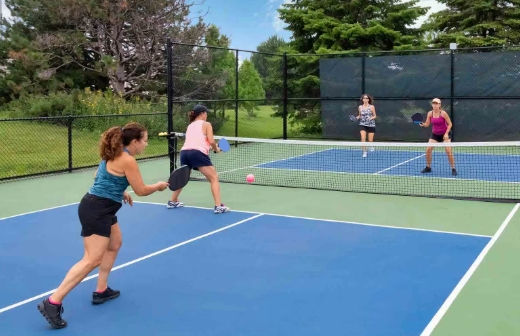
What I am saying is this: find the play. Find something — a sport, a class, a silly Sunday afternoon activity — that exists purely for the joy of moving, with no performance metric attached. Not for the number on your Whoop band. Not for the calories on your Apple Watch. Just for the genuine, uncomplicated pleasure of what your body can do.
What This Looks Like in Practice
You don't need to overhaul your training to bring play back in. You need permission — and maybe one small action.
Try something with no goal attached. Not for your step count, not for a PB, not for anyone watching. A dance class. A walk with no destination. A sport you haven't tried because some old voice in your head decided it was silly.
Notice what happens in your body when there's no pressure attached to the outcome.
Notice if you move differently. Breathe differently. Smile, even, mid-rep.
That's the information. That's what play is showing you.
A Body Built for the Whole Journey
Functional exercise will always have a place in what we do at Breaking Barriers — strength, conditioning, the structure that builds real capacity. But functional movement — the wild, unscripted, joyful kind — deserves its place too.
Because the goal was never just to be strong in this decade. It's to be capable, confident, and free in your body for the whole journey. Off the floor at 80. Steady on uneven ground at 70. Still climbing, still lifting, still playing — for as long as you're here.
So this month, find your version of play. Not instead of the work. Alongside it.


Comments